Tuning Interphasial Chemistry with Titanium-Oxo Clusters for High-Energy-Density Lithium Metal Batteries
Abstract
Trace amounts of water in commercial carbonate-based electrolytes produce hydrogen fluoride (HF), accelerating the corrosion of high-nickel cathodes and the dissolution of transition metal ions. This severely damages electrode–electrolyte interphase stability and intensifies electrolyte decomposition, causing rapid capacity degradation and failure of high-voltage lithium metal batteries (HVLMBs). Herein, we propose polycaprolactone diol-modified titanium–oxo clusters (TOC–PCL) as a multifunctional electrolyte additive to tune interphasial chemistry on high-nickel cathodes and Li anodes. Trace H₂O and HF are effectively eliminated via TOC–PCL hydrolysis in the electrolyte, followed by in situ construction of stable electrode–electrolyte interphase enriched with inorganic components (TiO₂, Li₂TiF₆, and LiF) during cycling, substantially inhibiting interphase chemical corrosion. As a result, the LiNi₀.8 Co₀.1 Mn₀.1 O 2 ||Li cell (NCM811:12 mg cm –2 ) with the TOC–PCL additive delivered over 1000 cycles at 1 C with 80.4% capacity retention, as well as even under ultrahigh cathode loading (41 mg cm –2 ) and nickel content (96 wt %). The 1.6-Ah NCM811 pouch cell with a 50 μm Li thickness exhibited a high energy density (401.6 Wh kg –1 ) over 150 cycles. This universal strategy of TOC–PCL multifunctional additives was extended to 3-Ah NCM811||silicon–carbon pouch cells, resulting in considerably prolonged cycling life of 500 cycles at 0.5 C. This study highlights the broad application prospects of metal–oxygen clusters, providing new insights for developing HVLMBs with high energy density and long cycle life.

LIAO Yaqi
Postdoc (solid state electrolyte)
Postdoctoral researcher working on Postdoc (solid state electrolyte).
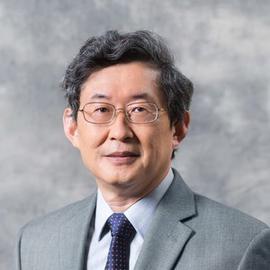
Yang REN
Chair Professor and Lab Director
Yang REN is Chair Professor and Head at the Department of Physics, City University of Hong Kong, and Director of the Hong Kong JC STEM Lab of “Energy and Materials Physics”. He leads a large CityU laboratory of faculty, postdoctoral researchers and students working across energy and materials physics.