Abstract
It is disclosed that calcium‐based biominerals, particularly hydroxyapatite (as in vertebrate bones and teeth), calcium carbonate (as in plankton and corals), and calcium pyrophosphate (as the cause for pseudogout), can be mineralized from the same precursor—“supervariate” gel, a stable and non‐toxic amorphous gel easily prepared by mixing common water‐soluble inorganic salt. When dispersed in a Na₂CO₃or K₂HPO₄solution, this multi‐ionic, “supervariate” gel can selectively form the biomineral calcite (CaCO 3 ) or hydroxyapatite, respectively. More remarkable reactions happen when the gel is dispersed in a CaCl₂solution under ambient conditions: dihydrate calcium pyrophosphate (Ca₂P₂O 7 ·2H 2 O, CPP) is produced in the morphologically intact gel matrix. The resulting gel further transforms into hydroxyapatite upon drying at room temperature. Because of the ubiquity of pyrophosphate in organisms, such mild formation of calcium pyrophosphate dihydrate (contrasting the high temperatures needed in other non‐enzymatic procedures, e.g., as in condensing phosphoric acid), and its transformation into hydroxyapatite, sheds light on 1) the role of pyrophosphate in life’s origin; 2) key biomineralization mechanisms in physiological processes. This “supervariate” gel is also applied for dental repair and osteogenesis.

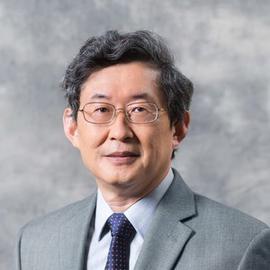
Yang REN
Chair Professor and Lab Director
Yang REN is Chair Professor and Head at the Department of Physics, City University of Hong Kong, and Director of the Hong Kong JC STEM Lab of “Energy and Materials Physics”. He leads a large CityU laboratory of faculty, postdoctoral researchers and students working across energy and materials physics.